
Qube Money built a loyal following by making envelope budgeting feel real. Instead of simply tracking categories after the fact, Qube helped people decide where money belonged before spending it. For many users, the best part was the friction: choosing a qube, unlocking spending, and staying connected to the budget in real time.
But in 2026, many Qube users are looking for a more stable replacement. Qube’s banking services were paused in 2025 while the company transitioned toward Qube+. Qube+ is positioned as a budgeting system that connects to an outside checking account, and no longer holds customer funds.
That means the best Qube alternative depends on what you loved most about Qube. If you only need a budgeting app, there are several options. But if you want envelopes, card controls, real spending limits, and banking in one place, the list gets much shorter.
Quick answer: What is the best Qube Money alternative?
The closest Qube Money alternative is Envelope, because it combines envelope budgeting with a checking account, debit card, envelope-level spending controls, and banking features. Unlike traditional budgeting apps, Envelope is designed to help you spend from the right category at the moment of purchase, not just clean up transactions later.
Strong alternatives include:
App | Best For | Main Tradeoff |
|---|---|---|
YNAB | Hands-on zero-based budgeting | No built-in banking or debit card controls |
Goodbudget | Simple digital envelope budgeting | More manual, no banking rails |
Monarch Money | Household financial tracking | Less focused on envelope-style spending control |
EveryDollar | Simple budget planning | Less flexible for real-time envelope control |
Copilot Money | Automated spending insights | More tracking-focused than envelope-focused |
PocketGuard | Simple “what can I spend?” view | Less control for category-level spending |
Envelope | Qube users who want budgeting plus banking | Requires opening an Envelope account |
What made Qube Money different?
Qube was not just another budget tracker. It gave people a more intentional way to spend.
The features Qube users often cared about most were:
Digital envelopes (qubes) for spending categories
A debit card connected to budget categories
The habit of choosing a category before spending
Shared money management for couples and families
A system that made overspending harder in the moment
That last point matters. Most budgeting apps show you what happened after money is already gone. Qube helped people pause before spending.
For former Qube users, the best replacement should not simply show charts. It should help answer a practical question: Can I safely spend from this category right now?
YNAB
Best for: People who want a powerful zero-based budgeting method without changing banks.
YNAB, short for You Need A Budget, is one of the most respected budgeting apps available. It is built around assigning every dollar a job, planning ahead, and adjusting as expenses change.
YNAB is a strong option if you want discipline and structure, but do not need your budgeting app to control a debit card.
Why Qube users may like YNAB
YNAB is good for people who want to be hands-on with their money. Like Qube, it encourages intentionality. You decide what your money is supposed to do before you spend it.
YNAB is especially good for:
Zero-based budgeting
Paying down debt
Planning irregular expenses
Managing multiple accounts
Getting a clear view of cash flow
Where YNAB is different from Qube
YNAB does not replace Qube’s card-based spending experience. It does not make you choose a category before swiping, and it does not provide envelope-level debit card controls.
That means YNAB can help you plan well, but it will not stop you from spending out of the wrong category in the moment.
Best fit
YNAB is best for people who want a serious budgeting method and are comfortable using a separate bank account or debit card.
Goodbudget
Best for: Simple digital envelope budgeting.
Goodbudget is one of the most direct envelope budgeting alternatives. It uses the classic envelope method, where you divide money into categories and track spending against those envelopes.
NerdWallet lists Goodbudget as a budget app option for hands-on envelope budgeting, which makes it one of the more obvious alternatives for people who liked Qube’s envelope concept. :contentReference[oaicite:3]{index=3}
Why Qube users may like Goodbudget
Goodbudget is simple and familiar. If what you liked about Qube was the envelope structure itself, Goodbudget can feel easy to understand.
It works well for:
Manual envelope budgeting
Couples who want shared visibility
People who do not need banking features
Users who prefer a simple system over a complex app
Where Goodbudget is different from Qube
Goodbudget is more of a budgeting tool than a spending-control system. It does not provide the same debit-card-connected experience that made Qube feel different.
You may still need to use a separate checking account, separate debit card, and separate tracking workflow.
Best fit
Goodbudget is best for people who want the envelope method without needing banking, card controls, or real-time purchase friction.
Monarch Money
Best for: Households that want a full financial dashboard.
Monarch Money is a broader personal finance app. It is not a pure envelope budgeting app, but it can help couples and families track spending, budgets, accounts, investments, and net worth in one place.
Why Qube users may like Monarch
Monarch is helpful if you want visibility across your financial life. It is especially useful for households that want to see everything together.
Monarch can be a good fit for:
Couples managing money together
People with multiple accounts
Net worth tracking
Cash flow planning
Category-based budgeting
Where Monarch is different from Qube
Monarch is more about tracking and planning than controlling spending at the point of purchase. It does not recreate the “open a qube before spending” behavior.
If Qube worked for you because it created friction, Monarch may feel too passive.
Best fit
Monarch is best for people who want a polished financial dashboard, not necessarily a Qube-style spending system.
EveryDollar
Best for: Simple monthly budgeting.
EveryDollar is a zero-based budgeting app associated with Ramsey Solutions. It is designed to help users plan income, expenses, giving, saving, and debt payoff.
Why Qube users may like EveryDollar
EveryDollar is simple. It gives you a straightforward way to make a monthly plan and track spending against that plan.
It may work well for:
Beginners
Debt payoff plans
Simple household budgets
People who like monthly budget categories
Where EveryDollar is different from Qube
EveryDollar does not replicate Qube’s real-time envelope spending controls. It is more of a budget planner than a banking-connected envelope system.
Best fit
EveryDollar is best for users who want a simple budget and do not need the more advanced controls that Qube provided.
Copilot Money
Best for: Automated spending tracking and insights.
Copilot Money is a modern personal finance app focused on transaction tracking, spending insights, subscriptions, and clean design. It is popular with users who want a polished app that makes financial tracking feel easier.
Why Qube users may like Copilot
Copilot is good at helping you understand your spending. It can be useful if you want less manual work and more automation.
It may be a good fit for:
Automatic categorization
Subscription tracking
Spending trends
Clean mobile-first design
People who want financial visibility without rebuilding their banking setup
Where Copilot is different from Qube
Copilot is not built around the envelope method in the same way Qube was. It is better at analyzing spending than controlling spending.
If you need strong category boundaries before purchases happen, Copilot may not be enough.
Best fit
Copilot is best for people who want a beautiful spending tracker, not a strict envelope budgeting replacement.
Envelope
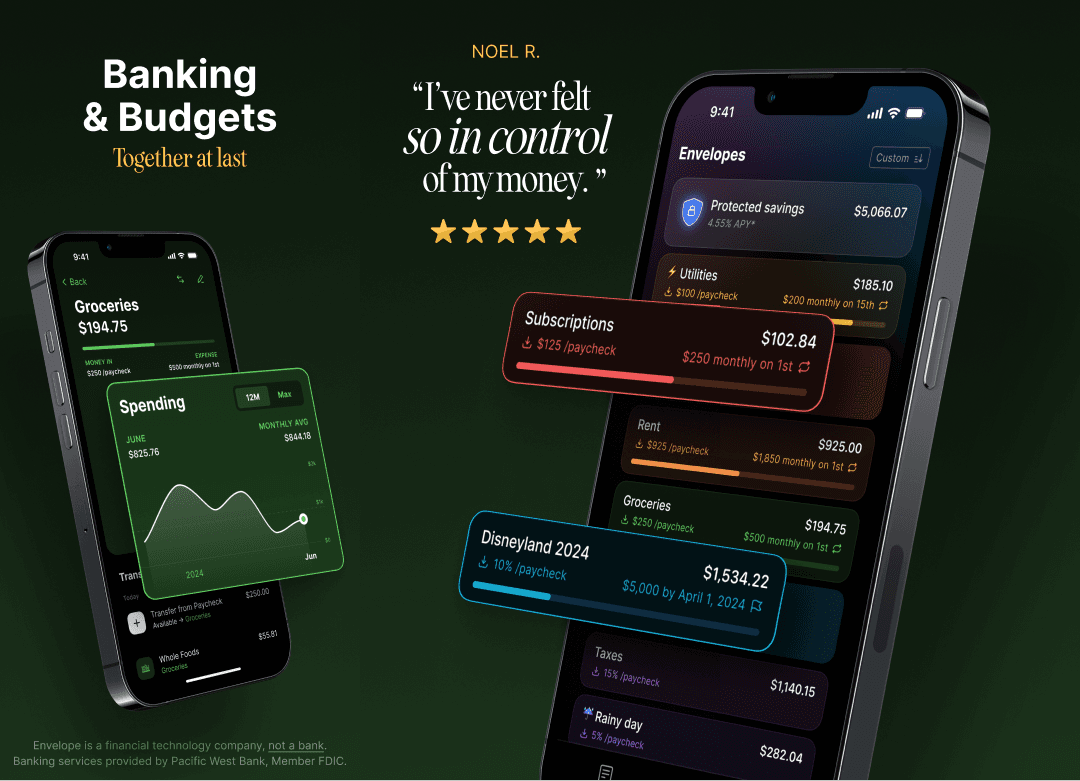
Best for: Former Qube users who want envelope budgeting, spending controls, and banking in one app.
Envelope is the closest replacement for Qube because it keeps the core idea of envelope budgeting connected to real spending. Instead of using envelopes only as a planning tool, Envelope lets you organize money into envelopes and use cards with spending controls tied to those envelopes.
Envelope’s existing Qube comparison article highlights several features that make it especially relevant for Qube users, including Auto-Lock, envelope cards, check deposit, ATM access, domestic wires, checkbooks, and a built-in checking account.
Why Qube users may like Envelope
Envelope is built around the same core behavior Qube users valued: looking at your money before spending it.
With Envelope, you can:
Create envelopes for categories like groceries, gas, bills, dining out, kids, travel, or fun money
Use envelope balances to guide spending decisions
Create virtual cards tied to specific envelopes
Use Auto-Lock to add intentional friction before swiping
Move money between envelopes when life changes
Use Envelope as a checking account, not just a budgeting overlay
For people who used Qube because they needed stronger boundaries, this is the key difference. Envelope is not only a reporting app. It is designed to help control the spending experience itself.
Where Envelope is stronger than Qube
Envelope may be a better long-term fit for users who want a more complete financial home.
Important advantages include:
Built-in checking account
Debit card access
Envelope-level virtual cards
Mobile check deposit
ATM access through Allpoint
Domestic wires
Checkbooks
Direct deposit support
That makes Envelope more useful for people who want their budget and spending account in the same place.
Potential downside
Envelope works best if you are willing to move some or all of your everyday spending into Envelope. If you only want a lightweight app that sits on top of your existing bank account, a tracker like Monarch, Copilot, or YNAB may be a better fit.
PocketGuard
Best for: A simple view of how much you can spend.
PocketGuard focuses on helping users understand what is safe to spend after bills, goals, and necessities. It is less envelope-focused, but it can be helpful for people who want a quick answer to “Can I afford this?”
Why Qube users may like PocketGuard
PocketGuard is simple and practical. It may work for people who found Qube helpful because it clarified spending limits.
It can help with:
Seeing available spending money
Tracking bills
Reducing overspending
Simplifying day-to-day money decisions
Where PocketGuard is different from Qube
PocketGuard does not recreate Qube’s category-specific debit card controls or intentional unlock flow. It gives guidance, but it does not create the same level of friction.
Best fit
PocketGuard is best for people who want a simplified spending snapshot instead of a full envelope budgeting system.
What about Qube+?
Qube+ is Qube’s next chapter, but it is not the same as the original Qube Money banking experience.
According to Qube’s website, Qube+ links to a user’s primary checking account and helps organize money into Bills, Spend, and Goals. Qube also states that Qube+ is not a bank and does not hold customer funds. :contentReference[oaicite:4]{index=4}
That may still be valuable for some users. But for people who loved Qube because it combined budgeting, spending, and card behavior, Qube+ may feel more like an external budgeting layer than a full replacement for the original product.
How to choose the right Qube alternative
The best Qube replacement depends on what you are trying to replace.
Choose Envelope if you want the closest Qube replacement
Envelope is the best fit if you want:
Envelope budgeting
A checking account
Debit card spending
Envelope-level virtual cards
Spending limits by envelope
Intentional friction before purchases
A budgeting system that works with real money movement
Choose YNAB if you want the strongest budgeting method
YNAB is best if you want:
Zero-based budgeting
Strong planning habits
Debt payoff support
A proven budgeting philosophy
No need for built-in banking
Choose Goodbudget if you want simple envelopes
Goodbudget is best if you want:
Basic envelope budgeting
Manual control
A simple shared household budget
No banking or card controls
Choose Monarch if you want a full financial dashboard
Monarch is best if you want:
Net worth tracking
Account aggregation
Household visibility
Flexible financial planning
Choose Copilot if you want automation and insights
Copilot is best if you want:
Automatic transaction tracking
Spending insights
Subscription tracking
A polished personal finance app
Best Qube Money alternative overall
For 2026, the best Qube Money alternative overall is Envelope.
The reason is simple: most budgeting apps can help you track spending, but Qube users are usually looking for something deeper. They want a system that changes how spending happens.
Envelope is the closest match because it combines:
The envelope budgeting method
A checking account
Debit card access
Envelope-specific spending controls
Auto-Lock for intentional friction
Banking features that make it usable as a primary account
If you used Qube because it helped you pause, choose a category, and spend with purpose, Envelope is the most natural replacement.
Frequently asked questions
Is Qube Money still available in 2026?
Qube has transitioned away from its original banking model. Qube’s own FAQ stated that scheduled payments and transfers would stop after September 30, 2025, and Qube+ is described as a system that connects to an outside checking account rather than holding customer funds itself.
What is the closest app to Qube Money?
Envelope is the closest Qube Money alternative because it combines envelope budgeting, card controls, and banking in one app.
Is there another app that makes you choose a category before spending?
Envelope is the closest option for users who want intentional spending controls. Auto-Lock and envelope cards can help recreate the pause-before-spending behavior that Qube users valued. :contentReference[oaicite:7]{index=7}
Is YNAB a good Qube alternative?
YNAB is a good budgeting alternative, but it is not a full Qube replacement. It is excellent for zero-based budgeting, but it does not include built-in banking or envelope-level debit card controls.
Is Goodbudget a good Qube alternative?
Goodbudget is a good option for simple envelope budgeting, especially if you do not need banking features. But it is more manual and does not recreate Qube’s card-connected spending experience.
What should former Qube users look for in a replacement?
Former Qube users should look for three things:
Envelope-style budgeting
Real-time spending visibility
Spending controls that work before money leaves the account
If you want all three, Envelope is likely the strongest option for 2026.