The Envelope System Explained: Budget Like a Pro
Learn how the envelope system works, why it stops overspending, and how to set it up in 2026. Digital and physical methods included.
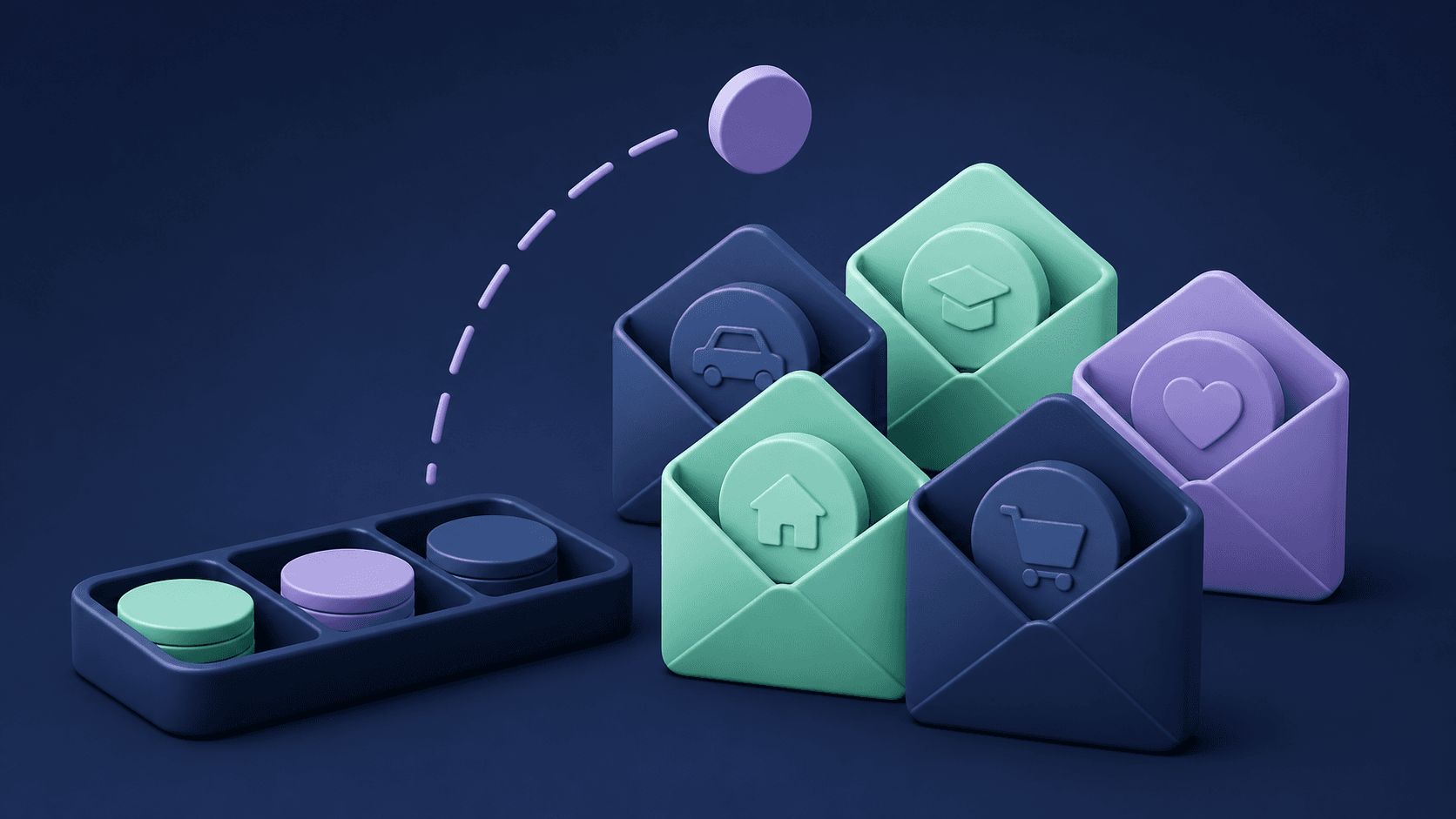
The FINRA Foundation's 2025 National Financial Capability Study found that 26% of Americans now spend more than they earn, up from a prior range of 18% to 20%. That trend has a direct, actionable solution sitting in plain sight: the envelope system. The envelope system is a proactive financial strategy, traditional budgeting tracks spending after it happens, while envelope budgeting assigns money before you spend it, and that shift alone changes financial behavior.
This guide explains exactly what the envelope system is, how it works in both physical and digital form, why the psychology behind it is so powerful, and how to set it up starting this pay period.
Key Takeaways
Overspending is widespread: Nearly 2 in 5 Americans (39%) exceed their budget every month, while around 1 in 6 (15%) do it on a weekly basis. The envelope system creates a hard stop that prevents this by design, therefore, if you routinely run short before month-end, this method addresses the root cause structurally.
Cash triggers a measurable spending brake: In one landmark MIT auction study people bid 64-113% more for identical items when using credit cards than when paying with cash. If you are using cards without an envelope structure, you are statistically spending far more than you need to.
Most Americans lack basic budget awareness: A little over 55% of Americans do not use a budget, and a similar 56% of survey respondents said they did not know how much money they spent last month, according to The Penny Hoarder's national budgeting survey. The envelope system solves both problems in a single setup session.
Digital envelopes carry the same benefits: Users of budgeting apps save an average of 20% more per year than those without a system, therefore, if a physical cash system is impractical for your lifestyle, a digital envelope app produces comparable results.
Start small to succeed: The most common mistake is starting with too many envelopes, five to seven categories is plenty for month one.
Quick-Start Prioritization Framework
Strategy | Best For | Effort Level | Time to Results |
|---|---|---|---|
Physical cash envelopes | Chronic overspenders, those new to budgeting | Low | 1-2 pay cycles |
Digital envelope app | Card users, online shoppers, couples | Low-Medium | 2-4 weeks |
Hybrid approach | People with mixed cash/card habits | Medium | 2-4 weeks |
Zero-based budgeting alongside envelopes | Those ready for full financial overhaul | High | 1-3 months |
Start here if you're:
A first-time budgeter: Physical envelopes, the tactile, zero-tech approach removes all barriers to entry and produces immediate visual feedback.
A card-first household: A digital envelope app like Envelope; it applies the same categorical limits to debit card spending without requiring cash.
A couple managing shared finances: A digital tool with shared access, this removes the coordination friction that makes cash envelopes difficult for two-income households.
What the Envelope System Actually Is
The Core Mechanic
The envelope budgeting system is a monthly method where you divide your funds into envelopes designated for categories like groceries or entertainment. Whenever money is needed for a particular cost, the necessary amount is taken out of the appropriate envelope. Once the budget envelopes are empty, that's it, the limit is reached and there's no more money to spend. You either stop making purchases or borrow from another category.
That last sentence is the point. The system removes the negotiation most budgets invite. There is no mental math or willpower required, the empty envelope makes the decision for you.
What Goes in an Envelope (and What Doesn't)
The envelope system works for expenses that tend to vary, such as food, clothing, incidentals, and discretionary purchases. Fixed costs such as mortgage payments, rent, utilities, and insurance would not be included in the envelopes as cash. This is an important distinction. Automating fixed bills and using envelopes only for variable spending keeps the system manageable without losing its power.
Some categories, such as car maintenance, medical co-pays, and annual subscriptions, are irregular but predictable. These work best as sinking funds: a small monthly contribution to a dedicated bucket so the expense doesn't blindside you. Think of sinking funds as envelopes on a longer timeline.
Pro Tip: Before you label a single envelope, pull up your last three months of bank or credit card statements. Categorize each transaction and total each category. These real numbers, not aspirational ones, become your starting envelope amounts. Cutting from a realistic baseline is far more sustainable than setting limits you have never once met.
The Psychology That Makes It Work
The Pain of Paying
The envelope system's effectiveness is rooted in a well-documented psychological phenomenon. In a 2008 paper in the Journal of Experimental Psychology: Applied, researchers Priya Raghubir and Joydeep Srivastava found significant differences in spending based on how shoppers pay for things. Their main argument was that "the more transparent the payment outflow, the greater the aversion to spending", leading credit cards and gift cards to be treated more like "monopoly money."
Research shows humans spend 12-18% more when using credit cards versus cash. The average cash transaction is $22, while the average credit card transaction is $57. That is not a coincidence; it is a predictable behavioral pattern. If you are carrying $6,545 in average monthly household expenses (per the Bureau of Labor Statistics via Chase), even a 12% reduction in discretionary spending by switching to an envelope structure could save hundreds of dollars each month.
Why Seeing Money Disappear Changes Behavior
The system works because it converts abstract numbers into visible, tangible limits. Knowing you have "budgeted $400 for groceries" is different from seeing four $100 bills in an envelope and watching them disappear.
A combined 82% of Americans say they find the idea of being in debt stressful, according to YouGov's 2025 American financial attitudes survey. The envelope system attacks that stress at its source, because pre-allocated categories prevent new debt from forming in the first place. Every dollar has a job before it is spent, and that proactive design is what separates it from reactive tracking tools.
How to Set Up the Envelope System in Five Steps
Step 1, Calculate Your Take-Home Pay
Everything flows from your net (not gross) earnings, the money you have left after taxes and withholdings. Budgeting from your gross income is one of the most common beginner mistakes, because it sets limits you cannot actually meet. Add up all monthly income sources and record the total. This is your ceiling.
Step 2, List Your Variable Spending Categories
Common categories include groceries, household items, entertainment or dining out, clothing, gifts, gas, and allowance to be spent as fun money. Start conservatively. Starting with 12 categories creates overwhelm and inconsistency, start with 5 envelopes.
Step 3, Set Realistic Amounts
The system works because it you have consistently spent $450 sets up failure. Start with realistic numbers based on actual recent spending, then gradually reduce allocations as you identify specific changes. Review your bank statements for the last 30 days and use those figures as your first-month baseline.
Step 4, Fund Your Envelopes at the Start of Each Pay Period
Once you get paid, take the funds from your bank or an ATM. Divide the cash and put the designated dollar amount in each envelope, according to what you decided and wrote on each envelope earlier. For digital envelopes, this step happens in your app; you allocate income to categories before any spending begins.
Step 5, Spend Only from the Correct Envelope
You can dip into another envelope to cover an expense if needed, but if you are repeatedly needing to do this, you may want to adjust your budget. Consistent borrowing between categories is a signal to revisit the allocation, not permission to ignore the limit.
Pro Tip: At the end of each month, any leftover money in an envelope is a win. Money that is left in any envelopes at the end of the pay period or month can be saved for next month or used to build an emergency fund, save for a trip, or pay off debt. Redirect leftover cash intentionally, do not let it absorb into general spending.
Physical vs. Digital Envelopes
The Case for Physical Cash
Physical envelopes deliver the strongest behavioral signal. In 2024, cash payments accounted for 14% of all consumer payments, while credit and debit cards accounted for 35% and 30% respectively. That low cash-use rate helps explain why overspending is so widespread. Physical envelopes slow down the spending process and make financial decisions feel more intentional.
Pros:
Creates a genuine hard stop on spending, when the envelope is empty, purchasing stops
Activates the psychological "pain of paying" that reduces impulse buys
Requires no technology, apps, or subscriptions
Produces instant visual awareness of remaining balances
Cons:
Cash cannot be used for online purchases or automatic bill payments
Lost or stolen envelopes mean lost money with no recovery option
Impractical for couples sharing expenses across two locations
Requires regular ATM trips and cash management
The Case for Digital Envelopes
Physical cash has real limitations; it cannot handle online purchases, subscriptions, or shared expenses. Digital envelope apps provide the same psychological guardrails with full transaction coverage. Apps like Envelope, Goodbudget, and YNAB replicate the categorical hard-stop logic of physical envelopes while working seamlessly with modern card-based and online spending.
According to WalletHub, interest in envelope budgeting surged throughout 2025 and into 2026, driven by a combination of persistent inflation, rising credit card balances, and a social media movement that made budgeting feel accessible instead of restrictive.
Pros:
Works with debit cards, online shopping, and automatic payments
Allows shared access for couples or households
Tracks spending automatically when linked to bank accounts
Accessible on any device at any time
Cons:
Slightly reduced "pain of paying" compared to physical cash
Requires selecting and learning an app
Some premium apps carry a monthly or annual fee
Pro Tip: If transitioning from cash, run both systems in parallel for two weeks to build trust, then drop cash once you are confident in the digital tracking. This overlap period confirms that your app is capturing every transaction accurately before you fully commit.
Common Mistakes to Avoid
Starting With Too Many Categories
The system works because it unmanageable. The system loses its clarity and starts to feel like a second job. Five to seven categories in month one is a disciplined ceiling. Add more once the habit is established.
Borrowing Between Envelopes as a Default
While you can move money, after all, this is a flexible budget system; you cannot keep borrowing from other envelopes. This is an even more important concern if you notice that you are doing it to compensate for the same envelope month after month. It pays to look at the root of the problem and fix it. Frequent borrowing means one of your allocations is wrong. Adjust the amount rather than ignoring the signal.
Giving Up After One Bad Month
Giving up after one bad month is a frequent pitfall. To find success with this method, remember that it is a tool, not a strict rulebook. The goal is progress, not perfection. In my experience, the third month is where the system clicks. The first month surfaces every budgeting blind spot you have, that discomfort is productive, not a reason to quit.
Ignoring Irregular Expenses
Irregular but predictable costs, car registration, annual subscriptions, holiday gifts, derail more envelope budgets than any other single factor. These work best as sinking funds a small monthly contribution to a dedicated bucket so the expense does not blindside you. Divide the annual cost by 12 and fund a dedicated envelope each month. The expense becomes invisible when it arrives.
Frequently Asked Questions
What is the envelope system in simple terms?
Envelope budgeting is a budgeting method where you divide your income into categories and allocate a fixed amount of money to each category using separate "envelopes." Once the money inside an envelope runs out, spending in that category stops until the next budgeting cycle. It works with physical cash or a digital app, the mechanism is the same regardless of format.
Does the envelope system actually work?
The behavioral evidence is strong. Cash envelopes are more effective for overspenders because of the "pain of paying", research shows people spend 12-18% less when using cash versus cards. Beyond the numbers, WalletHub's 2025 analysis highlights how the method forces people to stay aware of spending and helps reduce impulse buys, a major problem when relying on plastic.
What categories should I use for my envelopes?
Focus on variable spending, the categories where your monthly amounts change. Not every expense needs an envelope. Focus on the categories where your spending is variable and where overspending is most common. Good starting categories include groceries, dining out, gas, entertainment, personal care, and clothing. Fixed bills like rent and insurance go on autopay and do not need envelopes.
Is the envelope system right for everyone?
The system is best for people who want to visualize how their dollars are being spent and are willing to put time and energy into managing their envelopes. People who struggle with impulse spending or have a hard time sticking to spending limits may benefit most. If you already have strong spending discipline and rarely overspend, a lighter budgeting approach may be sufficient.
Can I use the envelope system if I don't use cash?
Yes. Envelope budgeting is a simple strategy that may help you control your spending by giving a job to every dollar you earn, and you can use this budgeting system with physical envelopes or more modern digital budgeting apps. Tools like Envelope apply categorical limits directly to debit card spending, making the method compatible with a fully cashless lifestyle.
The envelope system has outlasted decades of personal finance trends because it solves the real problem: most people do not overspend because they lack financial knowledge; they overspend because nothing stops them in the moment. The envelope system creates that stop. Whether you start with paper and cash or open a digital budgeting app today, the principle is identical. Pre-allocate. Spend only what is in the envelope. Adjust based on what the data tells you. Repeat.
If you want to run the system entirely digitally, Envelope by envelopebudgeting.com builds the categorical envelope structure directly into a checking account, so your budget and your money are always in the same place.
Sources
FINRA 2025 National Financial Capability Study, Financial Industry Regulatory Authority. Reports that 26% of Americans spend more than they earn. https://finance.yahoo.com/economy/articles/why-26-americans-spending-beyond-093500443.html
Envelope Budgeting: The Complete Guide (2026), EnvelopeBudgeting.com. Covers the full envelope system methodology including debt prevention and setup steps. https://envelopebudgeting.com/articles/envelope-budgeting
American Spending Habits: 2024 Data, Clever Real Estate. Reports that 39% of Americans exceed their budget every month. https://listwithclever.com/research/bad-spending-habits-2024/
The Pain of Paying: Why Cash Feels Different Than Cards, SpendTrak. Covers MIT auction study showing 64-113% higher bids with credit cards. https://spendtrak.app/blog/pain-of-paying-cash-vs-cards
Does It Matter Whether You Pay With Cash Or A Credit Card?, Psychology Today. Research from Raghubir and Srivastava on payment transparency and spending behavior. https://www.psychologytoday.com/us/blog/the-science-behind-behavior/201607/does-it-matter-whether-you-pay-cash-or-credit-card
What Americans Think About Saving, Budgeting, and Debt in 2025, YouGov. Reports that 82% of Americans find debt stressful. https://yougov.com/en-us/articles/52938-what-americans-think-about-saving-budgeting-and-debt-in-2025
Envelope Budgeting Apps in 2026: Digital Evolution Guide, Plan and Multiply. Reports 20% savings increase for app users and trends in digital envelope adoption. https://www.planandmultiply.com/en/blog/envelope-budgeting-2026-digital-evolution
Envelope Budgeting Method: Complete Guide (2026), Wealthvieu. Covers cash vs. digital envelopes, pain of paying statistics, and setup advice. https://wealthvieu.com/personal-finance/budgeting/envelope-budgeting/
Cash Stuffing Explained: Why Envelope Budgeting Is Making a Comeback, LiveNOW from FOX. WalletHub 2025 analysis of the envelope method's resurgence. https://www.livenowfox.com/news/cash-stuffing-budget-trend-2025
How to Use the Envelope Budget System, Capital One. Covers mechanics, pros, and drawbacks of the physical envelope method. https://www.capitalone.com/learn-grow/money-management/envelope-budget-system/
Envelope System Budgeting: How It Works Step-by-Step, The Rich Guy Math. Covers common failure points, sinking funds, and realistic envelope budgets. https://therichguymath.com/envelope-system/
Average American Monthly Expenses, Chase / Bureau of Labor Statistics. Reports average household spending of $6,545 per month in 2024. https://www.chase.com/personal/banking/education/budgeting-saving/average-american-monthly-expenses-and-bills
How Does Envelope Budgeting Work?, Remitly. Covers common mistakes including unrealistic limits and lack of flexibility. https://www.remitly.com/blog/finance/how-does-envelope-budgeting-work/
The Best Envelope Budgeting App (Digital Cash Stuffing), EnvelopeBudgeting.com. Compares top digital envelope apps for 2026. https://envelopebudgeting.com/articles/best-envelope-budgeting-app
What's the Psychology Behind Credit Card Spending?, Benny. Research showing average cash transaction of $22 versus $57 for credit cards. https://benny.ghost.io/blog/whats-the-psychology-behind-credit-card-spending/