Transactions
Transactions
Envelope types

In How Envelope Works, you learned that envelopes give each dollar a purpose.
Most people start with standard envelopes, but Envelope also offers protected types for money that needs stricter separation. The right type depends on how you plan to use the money.
Envelope types | Standard | Protected Savings | Protected ACH |
|---|---|---|---|
Best for | Everyday expenses and flexible budgeting | Emergency funds and long-term goals | Bills that should be isolated from other spending |
Where money is stored | Main checking account | Separate account | Separate ACH-only checking account |
Card spending | Yes | No | No |
ACH spending | Yes, using your main ACH information | No | Yes, using the envelope’s ACH information |
Earns interest | No | 3.28% APY* | No |
Limit | Unlimited | Up to three | Up to three |
Standard envelopes
Standard envelopes are the default and most flexible envelope type.

Use them to organize money for everyday expenses such as:
Groceries
Dining out
Gas
Clothing
Entertainment
Flexible bills
Money in standard envelopes remains part of your accessible checking balance. Card and ACH transactions can still use that balance, even when the money has been assigned to another standard envelope.
For example, imagine you have $500 in your Groceries envelope and $100 in your Dining Out envelope. A $120 restaurant purchase may still be approved because your overall accessible balance can cover it. You can then move money or adjust your plan.
This flexibility helps prevent an important transaction from being declined simply because money was placed in the wrong envelope.
Use a standard envelope when you want flexible spending and easy organization.
Protected Savings
Protected Savings is for money you want to keep away from everyday spending while earning a variable APY*.

Common uses include:
An emergency fund
A home down payment
A future vehicle
A major vacation
Other long-term goals
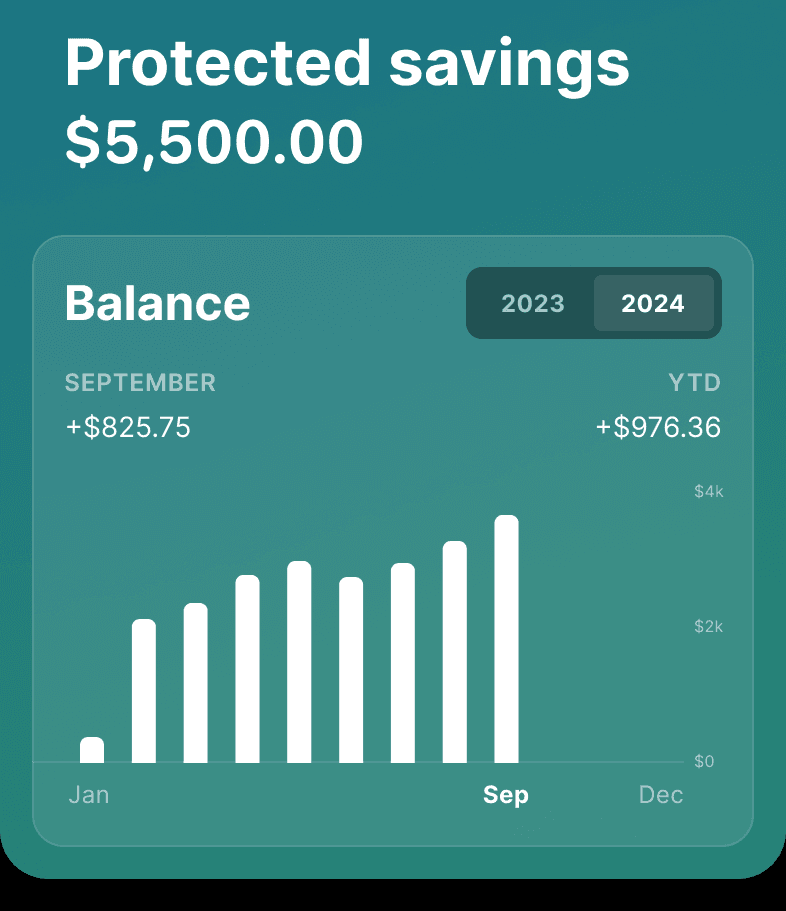
Card purchases and ordinary ACH withdrawals cannot use money in Protected Savings. To spend it, you must intentionally move it back into your accessible checking balance.
You can move money between Protected Savings and Available inside Envelope, including on weekends and bank holidays. You can also use funding rules to build your savings automatically.
Protected Savings does not have its own account and routing numbers. External ACH transfers must enter or leave through your checking balance.
Use Protected Savings when you want long-term money to earn interest and remain protected from everyday spending.
Protected ACH envelopes
A Protected ACH envelope stores money in a separate, ACH-only checking account.

Think of it as a checking account reserved for a particular bill. Your debit cards and main account’s ACH information cannot access its money. This protects important funds from card purchases and unrelated ACH withdrawals.
Protected ACH envelopes work well for large expenses such as:
Rent or mortgage
Utilities
Loan payments
Insurance premiums
Daycare
Recurring bills that offer an ACH discount
Each Protected ACH envelope comes with ACH information you can give to the biller. Payments made using that information draw from the protected envelope—not from your main checking balance or other envelopes.
Protected ACH is similar to Protected Savings because the money is held separately. The difference is how you use it:
Protected Savings earns interest and cannot be spent directly.
Protected ACH includes ACH information so a biller can withdraw money from it.
For example, placing your mortgage money in a Protected ACH envelope keeps it out of reach of card purchases and unrelated ACH charges while leaving it available for your mortgage payment.
Which type should I use?
Choose based on how accessible you want the money to be:
Choose Standard for everyday spending and flexible budgeting.
Choose Protected Savings for money you do not want to spend yet.
Choose Protected ACH for money reserved for a bill paid through ACH.
You can use all three types together. For example, you might keep groceries in a standard envelope, your emergency fund in Protected Savings, and rent in a Protected ACH envelope.
FAQ
Can I change an envelope’s type?
No. An existing envelope cannot be converted to another type. Create a new envelope with the type you want, then move the money into it.